
Today's Science & Education Updates [353]
News you can use in your anatomy & physiology course!

Scientists Detect “Ghost” Proteins That Could Explain Long COVID
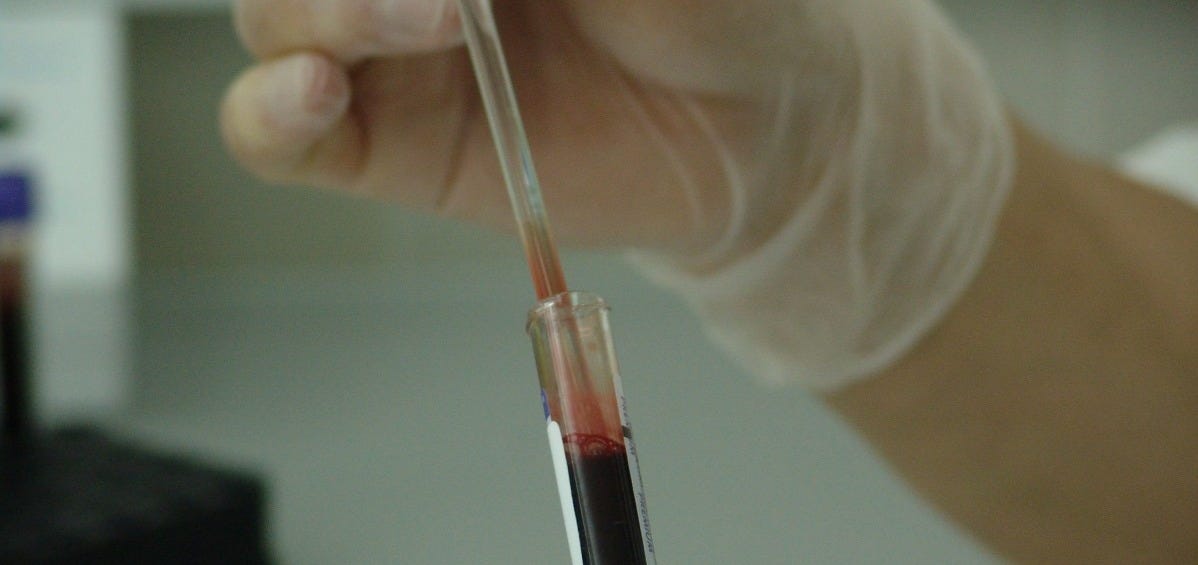
Scientists at the Translational Genomics Research Institute (TGen), part of City of Hope, along with colleagues at the Lundquist Institute for Biomedical Innovation at Harbor-UCLA Medical Center, have discovered what may be a biomarker for long COVID.
If other research groups can validate these findings, this marker could become the first measurable tool for diagnosing long COVID. At present, doctors rely solely on patient-reported symptoms that appear weeks or months after infection with SARS-CoV-2 to make a diagnosis.
Read more→ AandP.info/334a75
Scientists discover crystal that breathes oxygen like lungs
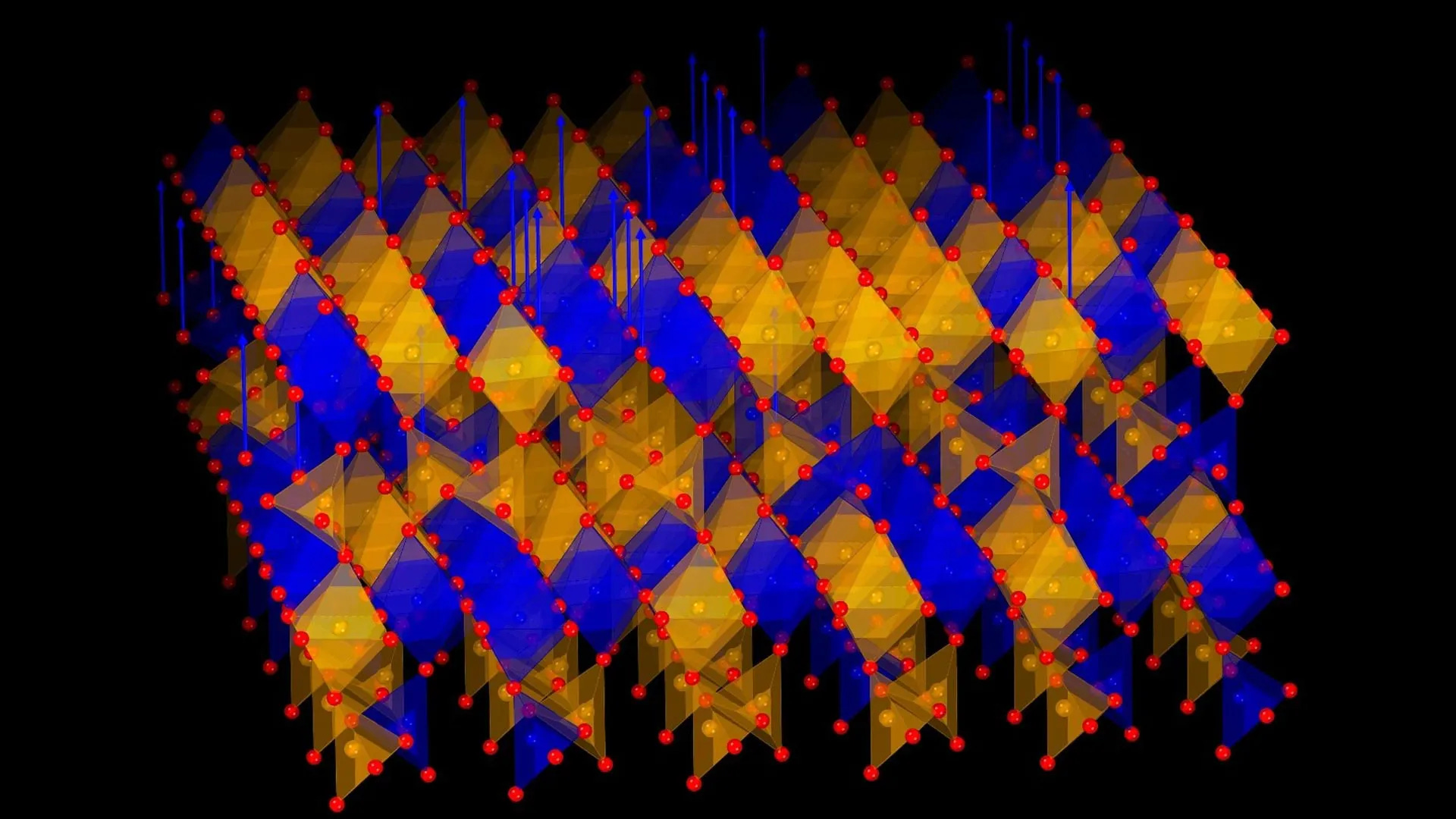
Researchers developed a crystal that inhales and exhales oxygen like lungs. It stays stable under real-world conditions and can be reused many times, making it ideal for energy and electronic applications. This innovation could reshape technologies from fuel cells to eco-friendly smart windows.
Read more→ AandP.info/92fe57
Microglia regulate neuronal activity via structural remodeling of astrocytes
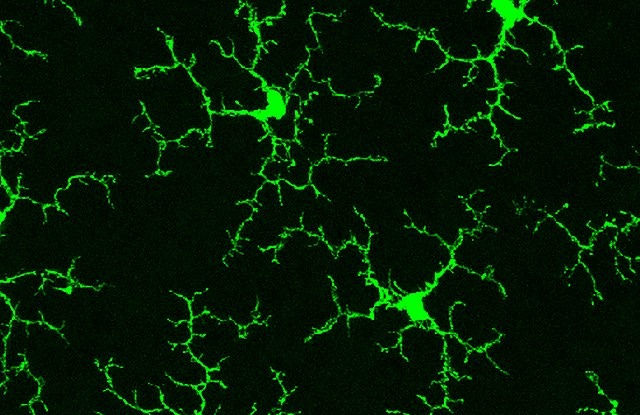
Neuron-glia interactions play a central role in regulating synaptic transmission and neuronal excitability. The structural plasticity of astrocytes is associated with numerous physiological and pathological conditions; however, the mechanism underlying this process remains unknown.
To examine the basis for structural astrocyte plasticity, we used the classic example of the loss of astrocytic processes that takes place in the rat hypothalamic magnocellular system during chronic high-salt intake. We discovered that a high-salt diet triggers a local accumulation of reactive microglia around vasopressin-secreting neurons but not in other brain areas. Microglia phagocytose astrocytic processes, reducing astrocytic coverage of vasopressin neurons. The pruning of astrocytic processes impairs synaptic glutamate clearance, enabling activation of extrasynaptic glutamate NMDA receptors and increasing the activity of vasopressin neurons.
Inhibiting microglia-mediated astrocyte pruning attenuates the increased neuronal activity and vasopressin-dependent hypertensive phenotype of rats fed a high-salt diet.
Thus, microglia orchestrate neuron-glia interactions and regulate neuronal activity through astrocyte pruning.
Read more→ AandP.info/a6c15f
10 Reasons Why Mucus Is Our Friend
What do fish slime, nasal gunk, and cervical mucus all have in common? They're vital topics for the A&P classroom! In this playful-yet-serious episode, Kevin Patton dives deep into mucus—yes, mucus—as a teaching opportunity. Using an 11-reason framework, Kevin explores mucus as a mechanical and immunological protector, transport system, microbiome regulator, and more. You'll also hear how mucus supports running concept lists, engages students through gross-factor moments, and serves as a unifying thread across organ systems. Along the way, there’s a nod to the Virtual HAPS Conference, an honor for educator Kerry Hull, and tips for clarifying the "mucus/mucous" confusion that trips up learners. If you’re looking for fresh ways to elevate underappreciated concepts in your A&P course, this is the episode for you. Bonus: plenty of mucus puns. Fair warning.
To listen to this episode, click on the play button above ⏵ (if present) or this link→ theAPprofessor.org/podcast-episode-154.html
RFK Jr demanded a vaccine study be retracted — the journal said no
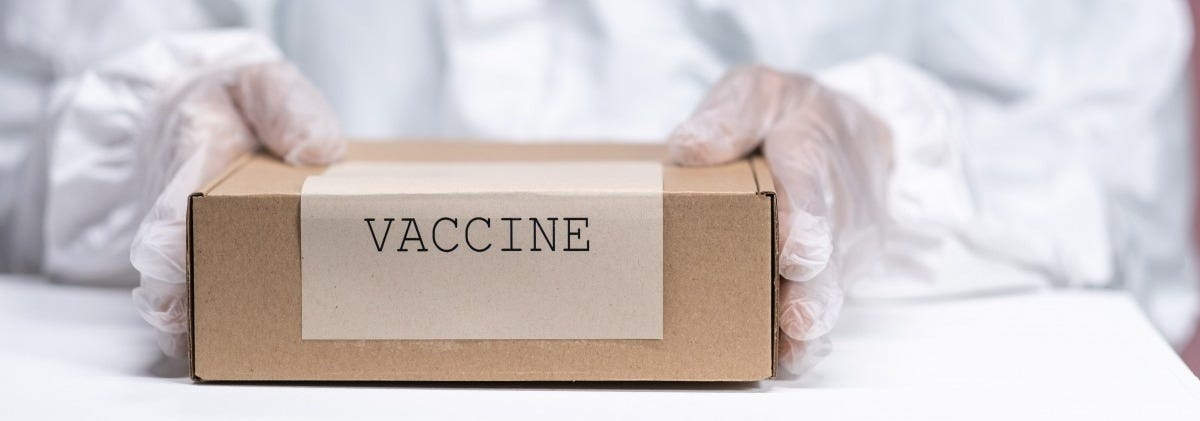
US health secretary and vaccine sceptic Robert F. Kennedy Jr has called for the retraction of a Danish study that found no link between aluminium in vaccines and chronic diseases in children — a rare move for a US public official. Aluminium has been used for almost a century to enhance the immune system’s response to some vaccines. But some people claim the ingredient is linked to rising rates of childhood disorders such as autism.
Public-health officials in Kennedy’s position rarely request that studies be retracted, says Ivan Oransky, a specialist in academic publishing and co-founder of the media organization Retraction Watch. Through this request, “Secretary Kennedy has demonstrated that he wants the scientific literature to bend to his will”, says Oransky.
The study1 in question, published in Annals of Internal Medicine in July, is one of the largest of its kind, looking at 1.2 million children born over more than two decades in Denmark. The authors reported that no significant risk of developing autoimmune, allergic or neurodevelopmental disorders was associated with exposure to aluminium compounds in vaccines.
In an opinion piece published on TrialSite News on 1 August, Kennedy called into question the study’s methodology, analysis and results. Since his appointment as head of the US Department of Health and Human Services, Kennedy has bypassed normal scientific review processes to change vaccine recommendations and terminated grants for projects on mRNA vaccines.
Annals of Internal Medicine says it stands by the study and has no plans to retract it. Christine Laine, editor in chief for the journal, wrote in a comment on the study’s web page on 11 August that “retraction is warranted only when serious errors invalidate findings or there is documented scientific misconduct, neither of which occurred here”.
Read more→ AandP.info/3m2
Vanishing Y chromosomes seem to be driving heart disease in men
Men who have lost their Y chromosome from a significant number of their immune cells are more likely to have narrow blood vessels, a key contributor to heart disease, according to a study of more than 30,000 people.
“Loss of Y is killing a lot of men,” says Kenneth Walsh at the University of Virginia, who wasn’t involved in the study. “Men live six years shorter than females, and an enormous amount of that mortality is due to their sex chromosome instability.”
Read more→ AandP.info/2fl
Having radio waves beamed into our head ramps up our sense of smell
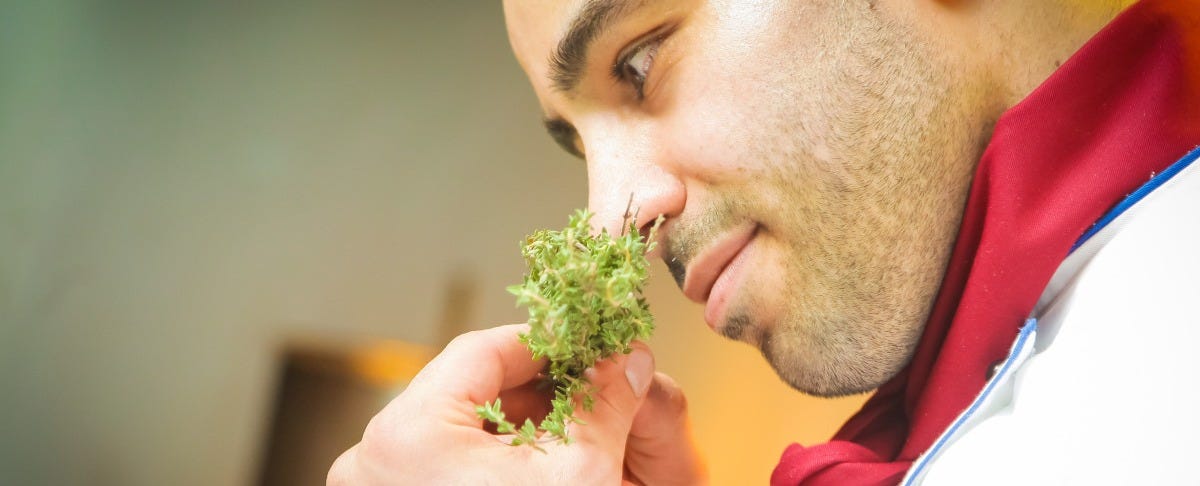
Beaming powerful radio waves directly into a person’s head seems to improve their sense of smell – at least temporarily.
Ageing, trauma and some neurological conditions can all affect the olfactory nerve, which enables smell, reducing or even eliminating the sense entirely. Many people also report a diminished sense of smell with covid-19. This has a knock-on effect on a person’s sense of taste and can be detrimental to safety, for instance, if they fail to detect a gas leak.
“In current clinical practice, severe olfactory dysfunction may be treated with surgery, while more common cases rely on chemical-based therapies, such as repeated aroma exposure at home,” says Yongwoo Jang at Hanyang University in Seoul. “Unlike other medical fields where therapeutic devices have advanced rapidly, treatment in this area has remained relatively traditional. Recognising this gap, we introduced the concept of electroceuticals, using bioelectronic stimulation as therapy.”
Read more→ AandP.info/hcy
Why honing your sense of smell could keep you sharp as you age

My new routine [of sniffing different scents twice daily] – training what is, for most of us, a neglected sense – was inspired by some striking research linking our noses’ sensitivity to our cognitive performance. For one thing, studies have shown that the worse your sense of smell is, the worse you perform in cognitive assessments. Olfactory dysfunction has also been linked to more than 100 conditions, including ALS (motor neurone disease), multiple sclerosis, Parkinson’s disease, Alzheimer’s disease and general age-related cognitive impairment.
Read more→ AandP.info/d7y
First-Of-Its-Kind Cell Transplant Brings a Cure For Diabetes Closer
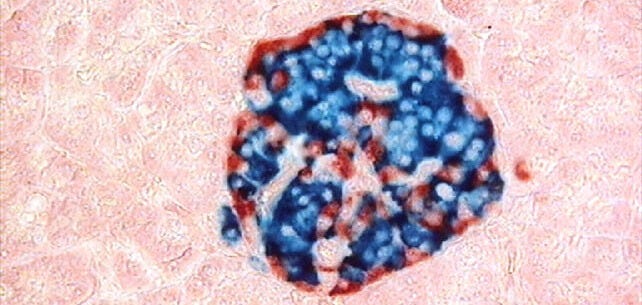

A patient with type 1 diabetes has begun producing his own insulin after receiving a transplant of pancreatic cells.
For the first time in humans, these islet cells have been genetically edited so they wouldn't be rejected by the patient, removing the need for immunosuppressant drugs.
Type 1 diabetes usually begins when the immune system mistakenly attacks the islet cells in the pancreas, which are responsible for producing insulin. The condition is usually managed with a careful diet and regular insulin injections, but an emerging treatment involves replacing the damaged islet cells with functional ones.
In a new proof-of-concept study, a 42-year-old male patient, who had had type 1 diabetes since the age of 5, received a transplant of islet cells from a healthy donor. The cells were delivered through a series of injections into the muscle of his forearm.
Over the next 12 weeks, the cells successfully produced insulin in response to glucose spikes, such as after meals. But the most important aspect is that the patient didn't require immunosuppressants.
Read more→ AandP.info/tuu